Review: Antonia and Her Daughters - A Cinematic Exploration
A critique of Marleen Gorris's film 'Antonia and Her Daughters,' examining its narrative choices and portrayal of feminist themes.
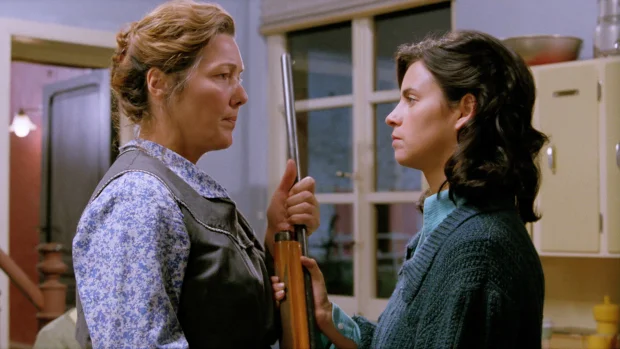
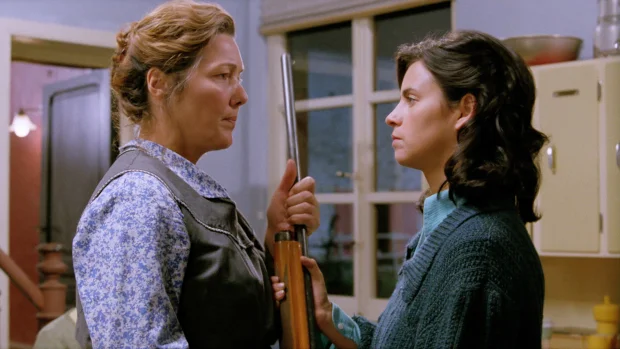
Antonia and Her Daughters
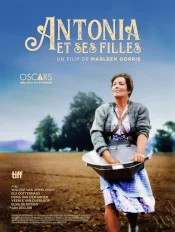
Netherlands, Belgium, 1995 Original Title: Antonia Director: Marleen Gorris Screenplay: Marleen Gorris Cast: Willeke Van Ammelrooy, Els Dottermans, Jan Decleir, Marina De Graaf Distributor: Tamasa Distribution Genre: Drama-Comedy Duration: 1h43 Release Date: August 5, 2026 (Re-release)
Rating: 2.5/5
For those who share our aversion to the pervasive voiceover that incessantly simplifies the intricate task of understanding the on-screen events, engaging with Antonia and Her Daughters may prove challenging. This narrative choice, coupled with the 1990s cinematic tendency to overlay every scene with bombastic music, significantly hindered our appreciation of this feminist chronicle envisioned by Marleen Gorris. While we hold personal reservations about this genre, which primarily chronicles the lives of a group of characters over time, the rendition provided by the Dutch director did little to reconcile us with it.
In fact, the film's progressive undertones, advocating for a lifestyle that diverges from patriarchal traditions in rural settings, often become diluted within the unyielding cycles of birth and death. As a portrayal of a village microcosm typical of the mid-20th century, the narrative is somewhat more compelling. However, the deeper exploration of social power dynamics and the fading of Christian traditions falls victim to the melodramatic stakes of the plot. The film's elements of betrayal, assault, and domestic violence remain largely peripheral, overshadowed by a seasonal routine that feels disappointingly innocuous.
One might wonder what Gorris aimed to convey with her feminist fable, which won the Oscar for Best Foreign Language Film in 1996, as it often seems to practice activism in a rather evasive manner...
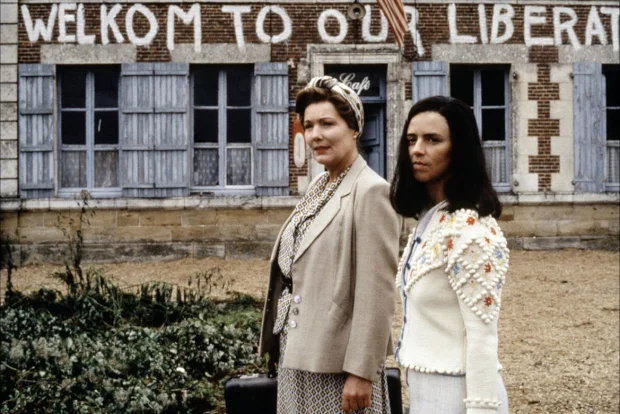
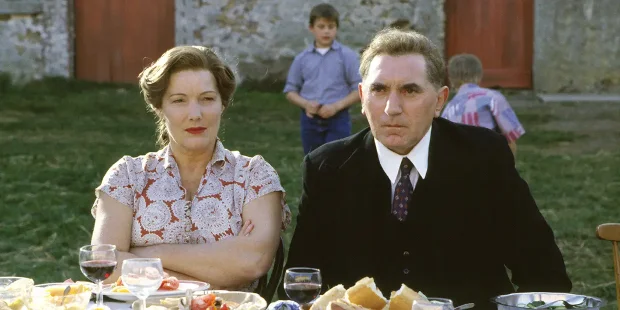
Synopsis: After the war, Antonia returns with her daughter Danielle to her birthplace. Little has changed in the twenty years since her departure. Although she disapproves of the narrow-mindedness of some villagers, she settles in. Through her warm hospitality towards neglected or abused women, she gradually becomes a quietly feminist figure in the community. She embraces this role without pride until her death, when she gathers her large, blended family around her.
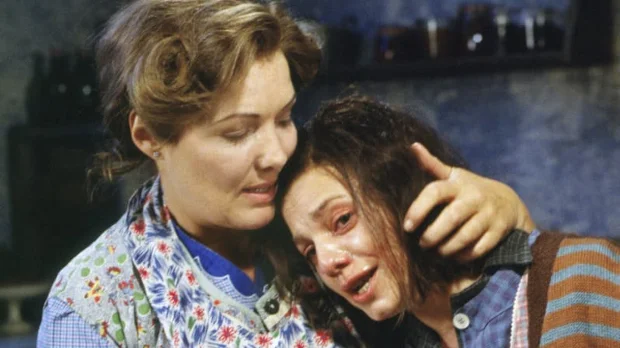
The Passage of Time
As the voiceover frequently reminds us, time moves swiftly in Antonia and Her Daughters. This accelerated perception of time is subtly reflected in the film's makeup, which stands out as the most successful technical aspect. However, there is a glaring absence of evolution in transportation or household gadgets that proliferated in Europe post-1950. Antonia and her rather sleepy village appear to exist in a self-sufficient bubble, disconnected from the significant events that must have punctuated Dutch life. This narrative opts for a peculiar insularity, where characters are free to remain perfectly static.
The simplicity of the characters is striking. Each is assigned a social and dramatic role from the outset, with any deviation from this role being strictly forbidden. This applies to our protagonist, the calm and observant center of the story—save for a brief moment of rage—as well as her unofficial descendants. While these women thrive in their refuge from the outside world, they seem to have no other purpose than what the script dictates from their first appearance. The male characters fare no better; at best, they are enchanted by the wisdom of their female counterparts, and at worst, they feel entitled to act with impunity towards these women on their path to emancipation.
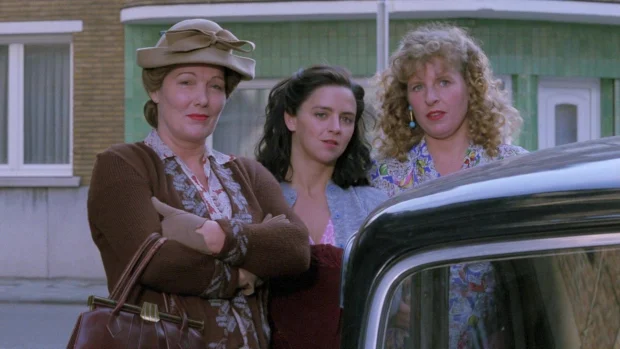
The Miracle of Death
In addition to its questionable treatment of women's rights to their own lives and bodies, Antonia and Her Daughters presents a curiously dreary view of existence. Joyful aspects of life rarely take center stage, as illustrated by the couples who all engage in intimacy on the same night, much to the dismay of Antonia's gifted granddaughter Thérèse, who struggles to sleep amidst the noise of the communal household. Notably, the film's overly modest depiction of lesbian erotic pleasure stands in stark contrast to its heterosexual counterparts, which represent some of the most voluptuous portrayals in late 20th-century European cinema.
Meanwhile, the vibrant colors of the restored digital copy fail to conceal the despair that underlies the story. This gloom, marked by a macabre tone, is present from the framing narrative, where Antonia reminisces about the fulfilling years spent in her pink house. Why is she the sole arbiter of the timing of her natural death, while the film's climactic slaughter occurs without reason or logic? This curious narrative freedom is one that Gorris exercises without hesitation.
It is unfortunate that the director never fully commits to her feminist and even fantastical impulses. Such a commitment could have allowed her fourth feature to genuinely claim its place as a cinematic manifesto in favor of women, as it is regarded in certain circles.
Conclusion
As the first film by a female director to win the Oscar for Best Foreign Language/International Film, Antonia and Her Daughters has carved out a somewhat anecdotal niche in cinema history. In the thirty years since this accolade, only two other female directors—Caroline Link from Germany and Denmark's Susanne Bier—have achieved this feat. Regrettably, Gorris's film handles its potentially rich feminist themes in a manner that is far too tame and flatly melodramatic to warrant remembrance for any other reasons.
You may also like