
Review: The Passage (Brandt Andersen) - Film Critique
After a long wait, Brandt Andersen's film _The Passage_ explores the Syrian refugee crisis through interconnected stories, presenting a complex narrative of resilience and tragedy.
The Passage
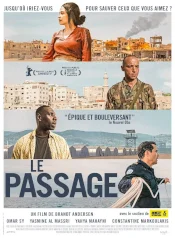
United States, Jordan, Turkey, Greece, 2024 Original Title: I Was a Stranger Director: Brandt Andersen Screenplay: Brandt Andersen Cast: Yasmine Al Massri, Yahya Mahayni, Omar Sy, Ziad Bakri Distributor: Nour Films Genre: Refugee Drama / Warning Duration: 1h44 Release Date: July 8, 2026
Rating: 3/5
After its special gala presentation at the Berlin Film Festival, it took over two years for The Passage to reach French cinemas, landing in the midst of summer. During this time, other wars and humanitarian crises have overshadowed the Syrian conflict in the eyes of Western media and public attention. Recent events, such as the surge of Moroccan migrants storming the Spanish enclave of Ceuta, exemplify this shift. The cycle of international outrage followed by political exploitation from extreme right factions, only to be replaced by the next headline, perpetuates a troubling narrative that allows the underlying misery driving these migration flows to remain obscured for privileged Europeans.
In this context, Brandt Andersen's debut feature struggles to make a substantial impact. Despite some valid criticisms regarding its emotional emphasis and reliance on pathos and religious themes, The Passage presents a complex portrayal of a crisis that has roots extending back to Shakespeare's time, as noted in the film's opening. The narrative unfolds as a puzzle, intertwining five parallel stories that occasionally veer into the territory of socially sensitive ensemble films. Yet, the emotions, while sometimes overemphasized, find a more powerful resonance in the nuanced observations about the daily tragedies faced by refugees.

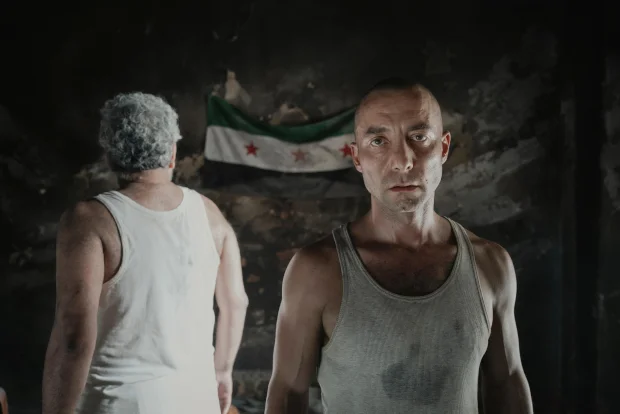
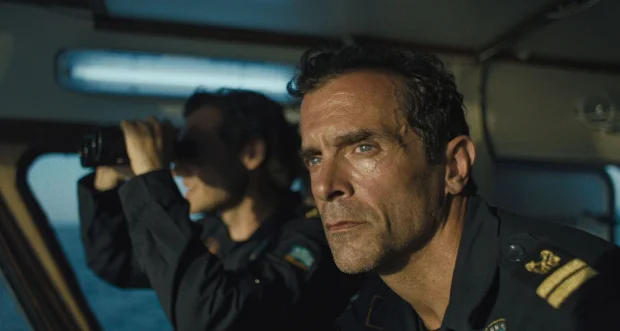
Synopsis: Five lives intersect amid the war in Aleppo, Syria, in 2015. On her birthday, doctor Amira returns home to celebrate with her family after a grueling 72-hour shift at a besieged hospital. Soldier Mustafa, loyal to the regime, begins to question his actions following a punitive mission against presumed terrorists. In Turkey, smuggler Marwan unscrupulously demands $2,000 per person for a perilous journey to Greece. Among his clients are poet Fathi, his wife, and their three children. Finally, Greek coast guard officer Stavros struggles to balance family life with the emotionally taxing task of rescuing distressed refugee boats at sea.
Family Matters
The repetitive structure of The Passage enhances its narrative strength. Each chapter unfolds with a mirrored setup, contrasting the horrific experiences of its characters with fleeting moments of humanity that connect these victims and perpetrators to a life still holding glimmers of hope. This ripple effect, where the next parallel action is revisited just hours before leaving the previous one, contributes to a valuable relativization. The screenplay, while somewhat schematic, does not shy away from presenting a truly catastrophic premise. The stark contrast between the grand introduction featuring Chicago's skyline and the immediate oppressive atmosphere of Aleppo under bombardment is striking.
However, the epic scope one might expect from such a film, seemingly opportunistic yet driven by noble aspirations, is somewhat lacking in this Mediterranean odyssey. Regardless of whether this dramatic choice is seen as a weakness or strength, the fragmented narrative creates an aura of impenetrable solitude around the five main characters. They face their struggles largely alone, with little hope for assistance or continuity should they vanish. With death looming regularly and striking indiscriminately—often targeting the most vulnerable, the children—they descend into a spiral of sacrifices and painful misfortunes, with no comforting resolution in sight.

Whose Fault Is It?
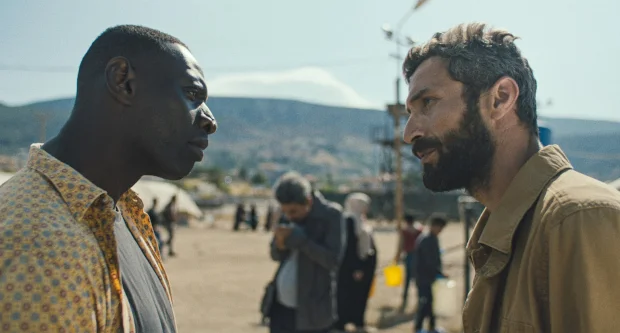
Having worked on the ground in the Syrian conflict as an observer of humanitarian efforts in the late 2010s, Brandt Andersen does not appear to downplay the severity of this war. This conflict is emblematic of the atrocities that civilians endure, where governments, driven by nationalistic fervor, Machiavellian motives, or sheer negligence, create what the smuggler cynically refers to as demand. Marwan's cold demeanor—markedly different from the charming roles typically portrayed by Omar Sy—serves as just one cog in the machinery that produces migrants, treating them with a lack of empathy.
This blind violence operates like a steamroller, assigning temporary roles of savior and villain without discernible winners in the ongoing refugee crisis. Although some characters' faith is highlighted with questionable insistence, likely influenced by the Christian-leaning Angel studio, Andersen's film transcends a simplistic endorsement of religious fervor. Instead, it celebrates the resilience of those fortunate enough to survive the ordeal of forced exodus. While they may carry the scars of trauma and struggle to find their place in a new homeland, they stand as witnesses to one of humanity's gravest tragedies: war.
Conclusion
While productions from the Angel studio often have a more overtly ideological slant and are typically distributed in France by the similarly unnuanced Saje Distribution, The Passage finds a different path with Nour Films. This shift may stem from the film's relatively measured approach to spiritual fervor. Rather than advocating for the salvation of its five protagonists through the strength of their faith, it aims to present a more nuanced portrayal of the urgent refugee issue. The film emphasizes numerous tragic turns while openly acknowledging that it does not possess all the answers regarding the diverse and constructive solutions needed to address this crisis before our system, built on stark social inequalities, collapses.
You may also like