Understanding the Ending of 50 First Dates
Exploring the ending of 50 First Dates, a beloved romantic comedy that intertwines humor with deep reflections on love, memory, and identity.

50 First Dates is a beloved romantic comedy from the early 2000s that seamlessly blends humor with a surprisingly delicate exploration of memory and identity. Directed by Peter Segal, the film reunites Adam Sandler and Drew Barrymore, who previously starred together in The Wedding Singer, crafting a narrative that uses a fantastical premise to delve into what it truly means to love someone anew every day.
The film's conclusion serves as a natural progression of this journey. The story of Henry Roth and Lucy Whitmore appears to be heading toward an impasse: how can a stable relationship exist when one partner forgets every experience from the day before? The film resolves this dilemma by taking an optimistic route, suggesting that love is not solely dependent on conscious memory, but rather on the ability to forge a new connection each day while retaining a sense of the previous one.
Peter Segal's Vision: A Romantic Comedy with Depth
Beneath the facade of a conventional romantic comedy, 50 First Dates presents a more ambitious narrative idea. Lucy's condition—a fictional form of anterograde amnesia that prevents her from retaining new memories after each night—forces the film to rethink the rules of the romantic genre. Each encounter between the leads becomes a true first date, erasing the traditional progression of their relationship.
Segal's direction maintains a light tone, balancing comedic moments with emotional situations without allowing the story to devolve into melodrama. This equilibrium enables the film to tackle complex themes such as neurological disorders, grief, and sacrifice while preserving the accessible charm that has made it a classic.
Henry's character development is also crucial. Initially, he is a brilliant marine veterinarian who struggles to form lasting relationships, opting instead to date tourists to avoid emotional entanglements. However, his meeting with Lucy completely upends this philosophy, leading him to choose a relationship that demands total dedication, patience, and the willingness to start anew every single day.
The Final Moments: Lucy's New Life
The film's climax unfolds after Lucy makes a painful decision. Upon realizing that Henry has given up a scientific project that would take him to Alaska to stay by her side, she believes she has become an obstacle to his dreams. In a bid to act in his best interest, she decides to end their relationship and even asks him to erase all traces of their time together, destroying the diary that held their shared memories.
Henry, heartbroken, agrees and prepares to leave. However, just before his departure, Lucy's father hands him a CD by the Beach Boys. This seemingly simple gesture carries significant weight. Henry recalls that Lucy only sang Wouldn’t It Be Nice on the days they met. If she continues to sing it, it indicates that something within her is surviving the daily loss of memory.
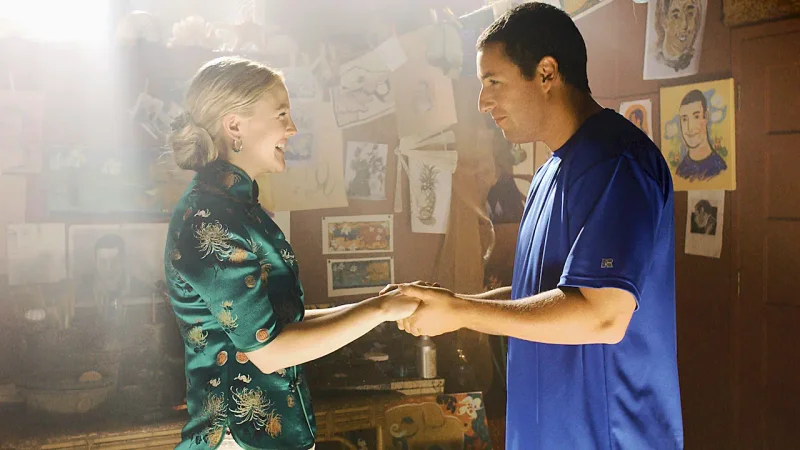
Motivated by this realization, Henry visits the specialized center where Lucy teaches art to patients with brain injuries. Although she does not recognize him—just as every morning—she reveals a surprising detail: she dreams continuously of a man whose identity she cannot discern. She then shows him numerous paintings that depict Henry. Even without conscious memory, a deep part of her mind continues to hold onto his presence.
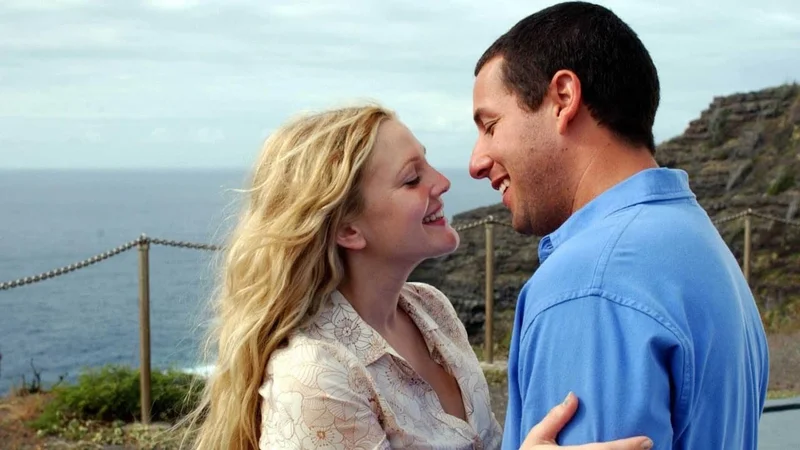
The definitive epilogue occurs some time later. Lucy wakes up on a boat and, like every morning, watches a video prepared by Henry. This time, the footage recounts everything that has transpired since their reconciliation: their wedding, the birth of their daughter Nicole, and their new life together during the scientific expedition in Alaska. When she steps onto the deck and sees Henry, now her husband, along with their daughter, she once again grasps the reality of her existence and chooses to embrace it with peace.
Love Beyond Memory
The deeper meaning behind the film's conclusion revolves around the relationship between memory and identity. While Lucy seems to forget everything, the film suggests that there are levels of consciousness that transcend mere rational recollection. Dreams, art, and emotions serve as traces that continue to exist, even when events are erased from conscious memory.
Thus, Henry gradually stops searching for a miraculous cure and shifts his perspective entirely. Initially, he aims to restore Lucy's lost life; by the end, he realizes that happiness can emerge from an imperfect condition. The new goal becomes to build a present that can be rediscovered each day without fear.
Moreover, the famous video message takes on a much more significant symbolic value than it appears. It serves not only to update Lucy on recent events but also becomes the ritual through which she reconstructs her identity daily, transforming a personal tragedy into a new routine that provides her with security.
In this way, the film offers a profoundly optimistic view of love. Henry accepts that he must win over the woman he loves anew each day, while Lucy chooses to trust her feelings, even when her mind cannot articulate the reasons behind them.

Henry's Growth: Choosing Love Daily
Henry's evolution likely represents the most significant change throughout the narrative. At the story's outset, he considers personal freedom to be the most important value in his life. He avoids any stable commitments for fear of losing his independence and personal goals.
However, meeting Lucy reveals a completely different form of freedom. The possibility of going to Alaska remains tangible, but it takes on new meaning when he understands that professional dreams can coexist with a genuine relationship. The scientific expedition does not get abandoned entirely; it simply becomes a shared project with his new family.
Simultaneously, Lucy's father and brother Doug alter their attitudes. For years, they had sheltered her by artificially recreating the same day, attempting to spare her from suffering. Instead, Henry introduces a more honest approach, daily revealing the truth through the video. This shift allows Lucy to confront the present rather than remain trapped in an unchanging past.
Thus, the growth of the characters illustrates that protecting someone does not mean hiding the truth from them, but rather providing them with the tools to face it with dignity.

The True Meaning Behind the Ending of 50 First Dates
The conclusion of 50 First Dates conveys that true love does not hinge on the perfection of circumstances but rather on the willingness to choose the beloved person every day. Henry and Lucy do not find a miraculous cure for her condition, and the film deliberately avoids an unrealistic resolution that would erase the weight of their situation.
Instead, it suggests that memory is merely a part of human identity. Emotions, gestures, sensitivity, and affection can persist even when recollections seem to vanish. Lucy's dreams and her paintings testify that love continues to exist in a deeper dimension of consciousness.
The final marriage scene also holds precise symbolic significance. It does not represent a reward after a long series of obstacles but rather a conscious choice to build a daily life grounded in mutual trust. Henry understands that he must present himself each morning as if it were their first meeting and embraces this responsibility without hesitation.
This is why the film remains one of the most cherished romantic comedies of its time. Beneath its lighthearted tone and comedic situations lies a surprisingly intense reflection: love does not reside in the memories we keep but in the gestures we are willing to repeat each day for the person we have chosen.
You may also like