Exploring the Plot Holes of Back to the Future
Back to the Future is a beloved film that has sparked discussions about its complex time travel narrative and the plot holes that arise from it. This article explores those inconsistencies and their implications.
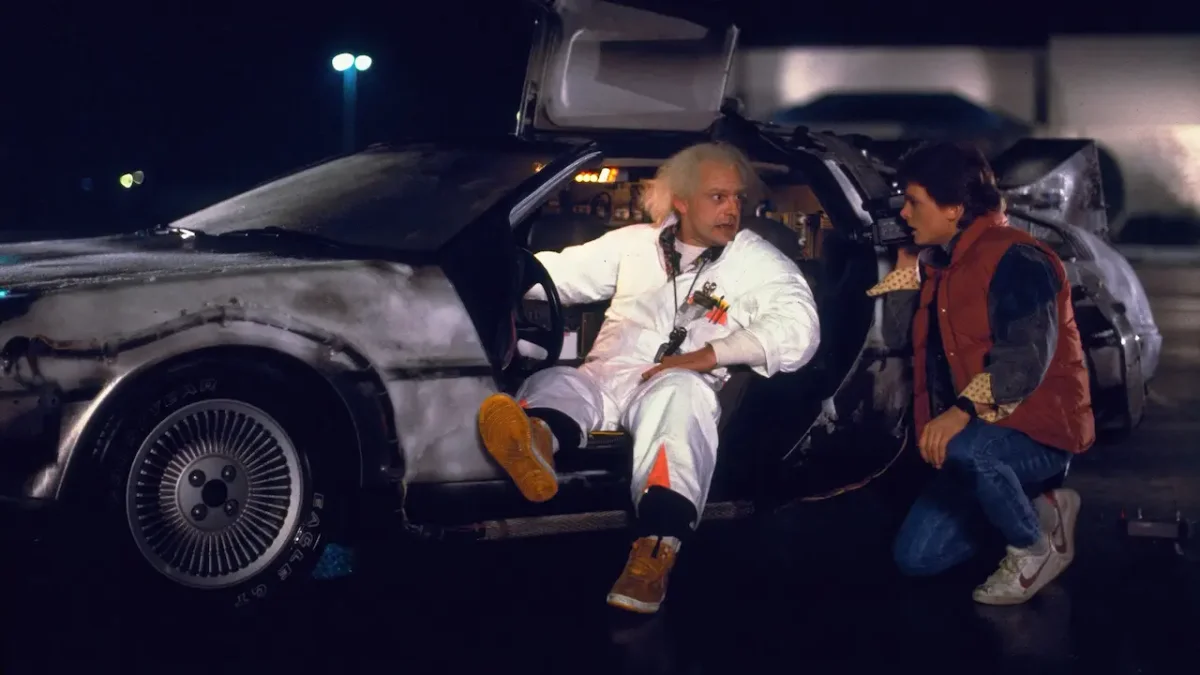
Back to the Future stands as one of the most beloved and iconic films in cinematic history. However, its intricate time travel narrative has sparked decades of debate regarding supposed plot holes. Directed by Robert Zemeckis and co-written with Bob Gale, the 1985 film transforms time travel into a storytelling device that weaves together elements of science fiction, comedy, adventure, and coming-of-age. The tale of Marty McFly and Doc Brown appears meticulously constructed, yet certain outcomes resulting from alterations made in 1955 seem to create contradictions that are hard to overlook.
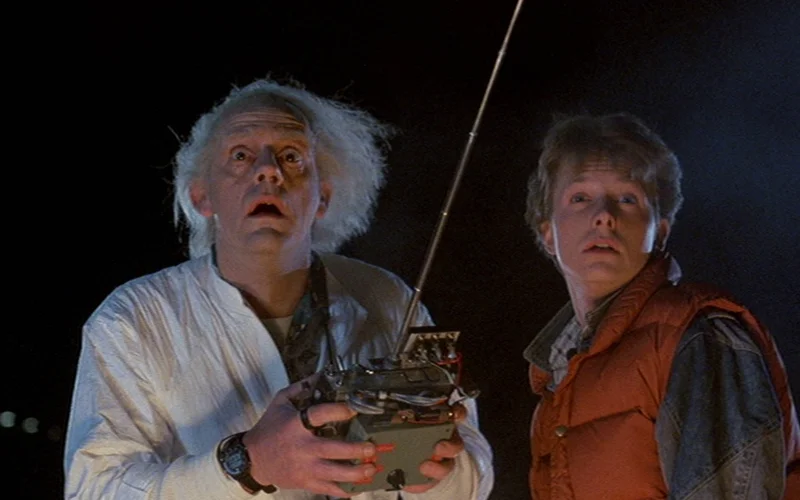
An intriguing aspect is that many of these apparent inconsistencies stem from a notion of time travel that the film is not necessarily bound to adhere to. Back to the Future does not depict the past as an unchangeable archive nor the future as a completely separate reality; instead, it builds a dynamic timeline where changes propagate progressively. Viewed through this lens, what seems like a plot hole often becomes a consequence deliberately left unexplored. Some of the most famous questions reveal just how aware the film is of the rules it has established.
How Time Travel Works in Back to the Future's Dynamic Timeline
The context is essential for understanding how Back to the Future operates. The film belongs to the tradition of popular science fiction that employs time travel as an adventure engine, but Robert Zemeckis integrates it with a structure reminiscent of a comedy of errors. The past is not merely a backdrop but a mechanism that allows Marty to directly influence his family's origins.
The consequences are evident when Marty inadvertently prevents George McFly from being hit by Lorraine's father's car. This act alters the encounter that is supposed to unite his parents, gradually erasing his own existence. This narrative insight is one of the film's most effective: the future does not change instantaneously; rather, change must propagate through history.
This setup also allows Zemeckis and Gale to maintain a straightforward rule: what Marty alters in the past produces consequences in the present. When he finally restores the relationship between George and Lorraine, the 1985 he returns to is profoundly different from the one he left. The family is more prosperous, George is self-assured, and Biff has been relegated to a subordinate position.
Thus, the film operates on a reality that rewrites itself based on events. This narrative choice aligns more with classic science fiction's temporal paradox than with a strictly scientific model. Demanding that every detail adhere to a single theory of time travel imposes a rule on the film that it has never established.
The Calvin Klein Conundrum: Why George and Lorraine Don't Recognize Marty
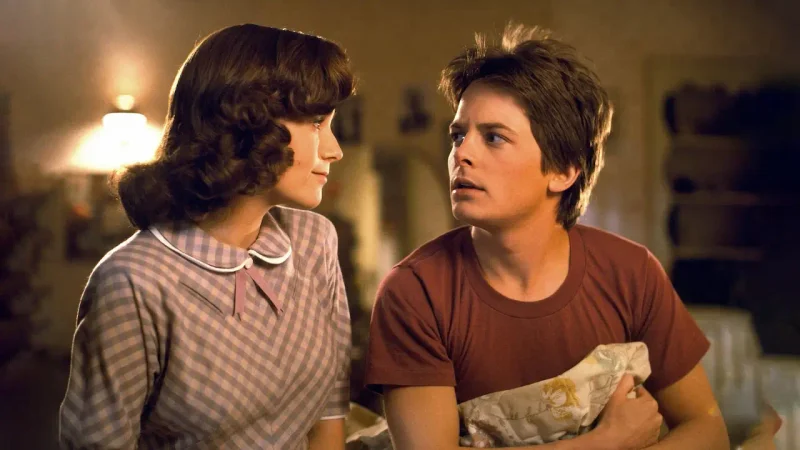
One of the most notorious plot holes concerns the relationship between Marty and his parents. In 1955, George and Lorraine meet Marty, who introduces himself as Calvin Klein, a name they read on his underwear. Marty even plays a pivotal role in their budding romance. Yet, in 1985, neither of them seems to recognize their son as that mysterious boy from the past.
At first glance, this contradiction appears glaring. Lorraine falls for Calvin Klein, and George considers him an important figure from his adolescence; why wouldn't they recognize his face thirty years later? The most plausible explanation relates to how memory functions. Marty spends only a few days with them during a time filled with people, events, and relationships destined to be forgotten.
The film also suggests that the significance of that encounter changes radically in the new timeline. In the original reality, George wins Lorraine's affection after being hit by her father's car; in the altered reality, Marty is the one who gets hit, creating the conditions for his parents' relationship. Calvin Klein may be remembered as a teenage crush without the boy's face being permanently etched in memory.
Moreover, George and Lorraine have no reason to connect their teenage son to that boy. They are unaware of time travel, lack photographs of Marty from 1955, and possess no elements that would turn that resemblance into certainty. Memory can preserve the emotional significance of an experience without retaining every visual detail, providing a far simpler explanation than it appears.
The New Marty: Changing Memories and the Paradox of a Life No Longer His Own
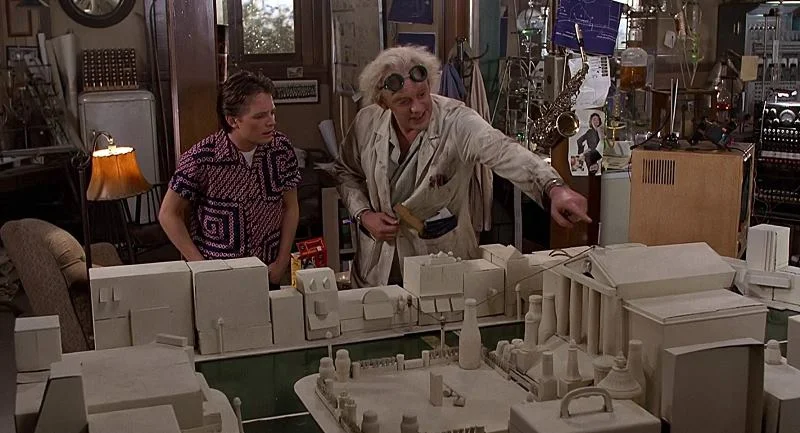
Another question arises regarding the Marty we see at the film's conclusion. If his family has changed significantly, then his childhood should also have been different. Thus, the new Marty should possess different memories from those of the boy we have followed throughout the story. Why, then, does he seem to remember his life perfectly?
The film already provides a crucial hint through Marty's gradual fading in 1955. After disrupting George and Lorraine's meeting, he does not disappear immediately; instead, his body starts to vanish slowly. Reality needs time to settle. The same principle can be applied to memories.
The Marty of the new 1985 may initially retain memories of the old timeline while his identity gradually realigns with the new reality. The film concludes before showcasing this process, as its primary interest lies not in narrating the mundane life following the time travel. The question of “how will Marty remember this new childhood?” belongs to a story that the film deliberately chooses not to tell.
The issue of George finding the courage to confront the bully at the dance can also be interpreted similarly. Marty has altered a series of events leading to his parents' relationship, and consequently, the dynamics of the dance are modified. George's newfound confidence stems from his experiences with Marty and Biff. It is unnecessary for every detail of the evening to match the original sequence; the timeline has changed.
This principle applies to the famous clock tower paradox as well. Marty possesses a flyer announcing the lightning strike destined to hit the tower, which Doc uses to return him to 1985. However, if the lightning is used for time travel, why should the flyer still exist? The answer lies in the circular nature of information: Doc could have retained or recreated the necessary conditions for the event to remain documented. The film does not depict this, nor does it establish that the flyer must automatically cease to exist.
What These Alleged Plot Holes Mean for Back to the Future
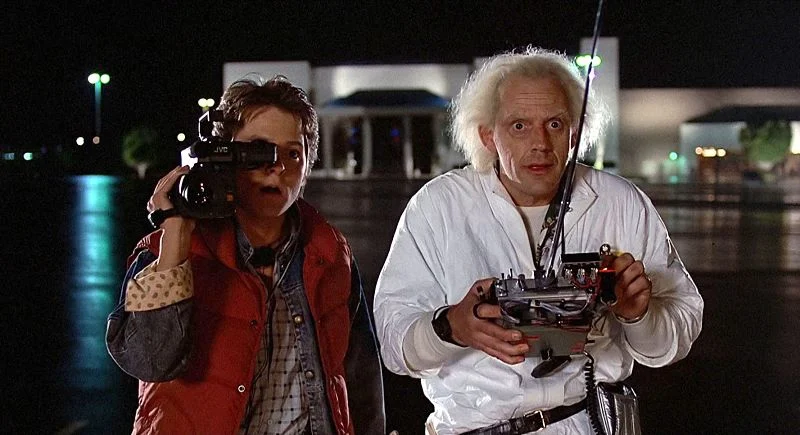
The supposed plot holes of Back to the Future become intriguing when one stops viewing them as mere mistakes and instead considers their function within the story. The film does not aim to construct a treatise on temporal causality; it seeks to use time travel to explore themes of family, identity, and possibilities. Marty enters the past as an observer and emerges as the architect of his own life.
The central point is this: the future he knew was not inevitable. George can become more confident, Lorraine can lead a different life, and even Biff can change his position within the family structure. Time travel thus serves as a metaphor for how a single choice can alter an entire existence.
For this reason, questions about Marty's memories, the failure to recognize Calvin Klein, or the continuity of the flyer are less significant than the narrative rule that binds them together. Back to the Future invites viewers to accept that a modified reality requires time to redefine itself. The consequences are not all shown because the film halts at the precise moment when the new possibility takes shape.
This is also what allows the ending to resonate emotionally. Marty does not simply return home; he comes back to a home that is no longer the one he left. His experience demonstrates that the past can be altered and that people can change. The unresolved details are thus the price of a story built around a rapid and spectacular transformation.
In this sense, Back to the Future remains remarkably coherent precisely because it does not claim to explain everything. Its time machine has rules sufficiently clear to support the narrative, yet flexible enough to accommodate the consequences the film does not need to depict. The alleged plot holes often represent blind spots that arise from the viewer's desire to see what happens beyond the story's boundary.
Perhaps this is the true strength of Robert Zemeckis' film: the time travel serves to tell a reality that can be rewritten, while the cinema stops before having to answer every possible consequence. The DeLorean takes Marty to the past, but it is the narrative structure that brings him back to a different future. The rest belongs to the viewer's imagination.