Understanding Cinematic Techniques: A Guide to Film Language
Explore the essential cinematic techniques that shape film language, including shot sizes, perspectives, sound, and lighting, to enhance your viewing experience.
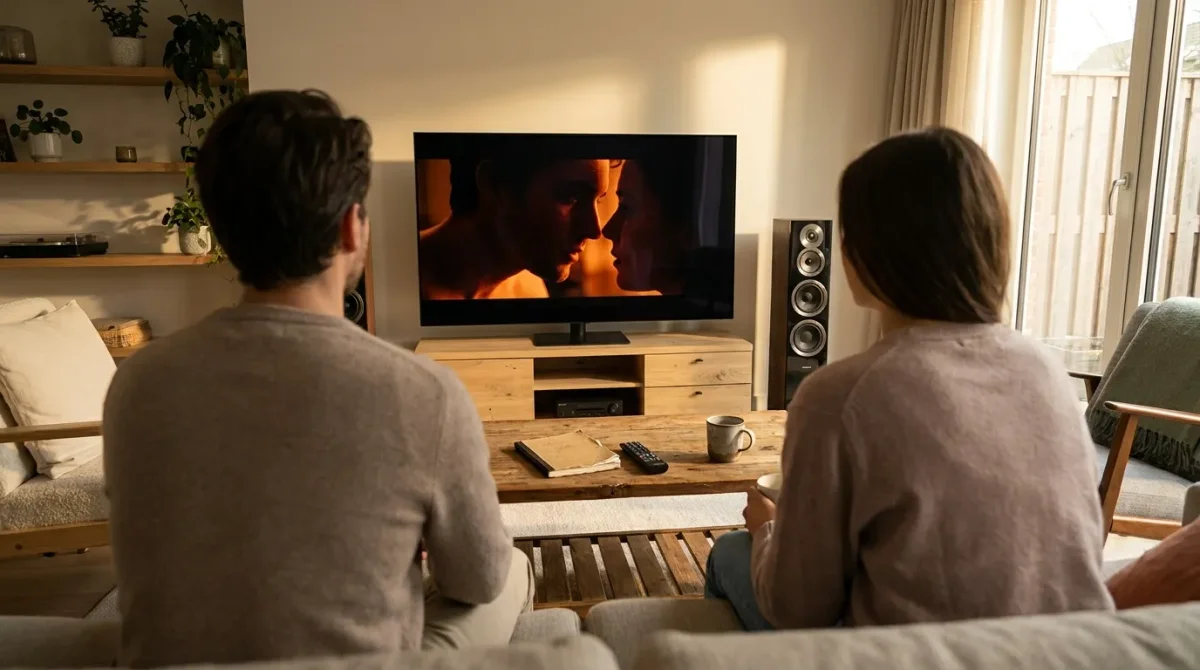
Films often evoke immediate emotional responses, such as tension, closeness, fear, or joy, even before viewers can articulate why. This is where cinematic techniques play a crucial role; they form the language of film, guiding our focus through direction, camera work, editing, and sound. These elements determine whether a scene feels calm, frantic, sorrowful, or menacing. For those who enjoy watching films or series, understanding these techniques enhances not only academic analyses but also the overall experience of watching trailers and enjoying movie nights.
In today's landscape, film culture extends beyond traditional cinema. Many audiences discover new content through streaming platforms, social media clips, series launches, and trailers. According to Destatis, in 2024, 68.3% of people in Germany engaged with videos from commercial providers or video-sharing services, a significant increase from 45.8% in 2022. This indicates that we encounter cinematic techniques daily, often without even realizing it.
This article aims to clearly outline the essential cinematic techniques, including shot sizes, perspectives, camera movements, editing, lighting, color, and sound. We will provide easily understandable examples from films, series, and trailers, while also contextualizing these techniques within contemporary film culture. This knowledge will help you quickly identify why a scene captivates, bores, or emotionally resonates with you.
The Importance of Cinematic Techniques in Modern Film Culture
Many people associate cinematic techniques primarily with academic analysis or technical jargon. However, they are also incredibly useful for viewers. They help explain why a horror film creates anxiety, why a romance builds intimacy, or why a trailer can captivate in just 90 seconds. According to the editorial team at Studienkreis, key elements such as shot size, perspective, movement, editing, and sound are designed to evoke specific moods and effects. The School of Hearing and Seeing further emphasizes that film images do not operate in isolation; their true power emerges from their interplay.
This understanding is particularly significant for today's film culture, where audiences frequently transition between cinema, streaming, and short video formats. While cinema remains robust, viewing habits are diversifying. The FFA reported that by 2025, there would be 91.9 million sold cinema tickets and 924 million euros in revenue in Germany. Concurrently, the home video market continues to grow, illustrating that film culture thrives through multiple avenues.
Current Statistics on Film Culture in Germany
| Metric | Value | Year | |---------------------------------------------|---------------|------| | Sold Cinema Tickets in Germany | 91.9 million | 2025 | | Cinema Revenue in Germany | 924 million € | 2025 | | Usage of Commercial Video Providers/Sharing | 68.3% | 2024 |
This table underscores why the topic is not merely theoretical. To effectively analyze films today, one must understand their language. This knowledge not only enhances discussions but also helps you make more informed decisions about what to watch and why certain content resonates with you.
The Fundamental Idea: Films Communicate Through Images and Sound
Before delving into specific techniques, it's essential to grasp a simple concept: a film communicates not only through its narrative but also through its form. The PH Freiburg explains that the language of film comprises both visual and auditory elements, and their significance arises from their interaction. This is the core of the subject.
Imagine two brief scenes. In Scene A, a character is alone in a room, captured in a close-up with warm lighting and soft music. In Scene B, the same character is viewed from a distance, in cold light, and nearly silent. While the actions are similar, the emotional impact is entirely different. This is the power of cinematic techniques.
For viewers, a helpful framework includes four questions: What do I see? From what perspective am I viewing it? How quickly do the images change? What do I hear? By focusing on these aspects, you can glean much about a film. When watching a trailer, you can apply this framework in seconds. A close-up combined with rapid cuts and booming sound likely indicates an action or thriller genre. Conversely, a wide shot with minimal music and long takes might suggest a drama or art film.
This perspective makes the exploration of film culture much more engaging. Modern series and films distinguish themselves not just through their stories but also through their styles. On platforms offering vast selections, a unique style can be the reason a title immediately piques your interest or leaves you indifferent.
Shot Sizes and Perspectives: Guiding the Viewer’s Attention
Among the most critical cinematic techniques are shot sizes and perspectives, which dictate how close you feel to a character and how you assess their situation. A wide shot reveals the setting, mood, and the relationship between characters and their environment. A medium shot brings you closer, while a close-up reveals emotions. An extreme close-up focuses your attention on a specific detail, such as a glance, a hand, or an object.
The impact of these techniques is straightforward: the closer the camera is, the more personal the scene feels. This is why dramas, romances, and emotional series often utilize many close-ups, while fantasy or historical films frequently feature wide shots to emphasize the world itself. A compelling comparison between calm imagery and intense action can also be found in critiques like that of the film Pressure.
Perspective also significantly alters perception. A low angle can make characters appear powerful or threatening, while a high angle can render them small, weak, or lost. A normal angle tends to feel neutral. Once you grasp this concept, you will notice it everywhere—in blockbusters, crime dramas, superhero films, and even trailers.
A particularly intriguing effect is the before-and-after scenario. Consider an interrogation scene: before, a medium shot conveys a calm impression with a factual distance. After, a harsh close-up with a slight low angle on the investigator and a high angle on the suspect creates an immediate power imbalance. The narrative remains largely unchanged, yet the visual framing transforms the dynamics.
For those interested in production processes and the training behind these decisions, exploring German film schools and initiatives for emerging talent can provide insight into how significantly these artistic choices are emphasized in education.
Movement and Editing: Understanding the Rhythm of Film
Audiences often sense when a film is fast-paced, jittery, or fluid. This is largely due to camera movement and editing. The camera can pan, track, circle, shake, or remain still, while editing determines how long a shot lasts and how scenes flow together. Together, these elements create the film's rhythm.
A handheld camera often conveys unease, intimacy, or chaos, making it a good fit for action, war films, or realistic dramas. In contrast, a smooth camera movement appears controlled, elegant, or observational. Dark crime series frequently employ slow movements to build tension, while comedies favor clear, readable images and sharp cuts.
Editing also influences our perception of time. Numerous quick cuts create a sense of urgency, while long takes can build pressure because the audience feels unable to escape. A classic example is a thriller moment where the camera lingers on a character as something threatening occurs in the background. The absence of rapid cuts heightens the suspense.
When testing this with the next trailer you watch, you’ll quickly identify patterns. Action trailers typically feature rapid cuts, dynamic movements, and rhythmic music, while prestige dramas often rely on longer shots, clear compositions, and deliberate pauses. Reviews of films like Exit 8 or Die Oyssee illustrate how atmosphere and pacing significantly contribute to the overall presentation. Thus, technique transforms into emotion.
A useful maxim is: The camera shows where you look, while the edit determines how long you remain there. Together, they shape tempo, tension, and focus.
Sound, Music, and Noise: The Invisible Forces Behind Impact
Many underestimate the power of sound, as it is often less consciously perceived than visuals. Nevertheless, it stands as one of the most potent cinematic techniques. Music can steer emotions, sound effects can create realism, and silence can be unsettling. Dialogue imparts information, but variations in volume, pauses, and emphasis can drastically alter its impact.
Consider a simple scene in a hallway. Without music, it feels neutral. With a low rumble, it becomes ominous. The same scene with light, playful music can appear almost comical. This illustrates that sound is not merely an accompaniment but a narrative force in its own right. According to experts in film language, the auditory dimension is integral to the overall effect and should never be viewed in isolation.
A compelling case study is the contrast between horror and drama. Initially, the scene features a room, a character, and a door. In the horror version, we hear creaking sounds, a deep bass, and sudden silence before a shock. In the drama version, there’s soft music, clear ambient sounds, and perhaps distant street noise. The visuals can remain similar, but the sound transforms the entire experience.
Series also cleverly utilize sound. Intros, motifs, and sound design help establish a recognizable world. This is crucial in a film culture where numerous contents vie for attention. Strong sound design ensures that a work lingers in the audience's memory, particularly during streaming premieres or new seasons, providing a significant level of brand recognition.
For your analysis, a quick question to consider is: What would happen if the sound were turned off? If the scene loses much of its impact, the sound has played a crucial role. If it remains powerful without sound, the visuals and editing contribute significantly.
Light, Color, and Mise-en-Scène: The Atmosphere Often Resides in the Space Itself
Cinematic storytelling is not solely shaped by camera work and sound. Lighting, color, and the arrangement of the space are also vital. The term mise-en-scène encompasses everything visible in front of the camera: sets, costumes, props, character positioning, and lighting. These elements often convey more than dialogue.
Warm lighting fosters feelings of intimacy, safety, or nostalgia, while cool lighting can feel distant, modern, or eerie. Dark areas create mystery, whereas bright, open spaces may evoke feelings of freedom or emptiness. Colors play a crucial role in conveying emotions and themes, further enhancing the storytelling experience.