Understanding the Ending of Sergio Leone's 'For a Few Dollars More'
Explore the deeper themes of revenge and memory in Sergio Leone's 'For a Few Dollars More', and understand the significance of the film's ending.
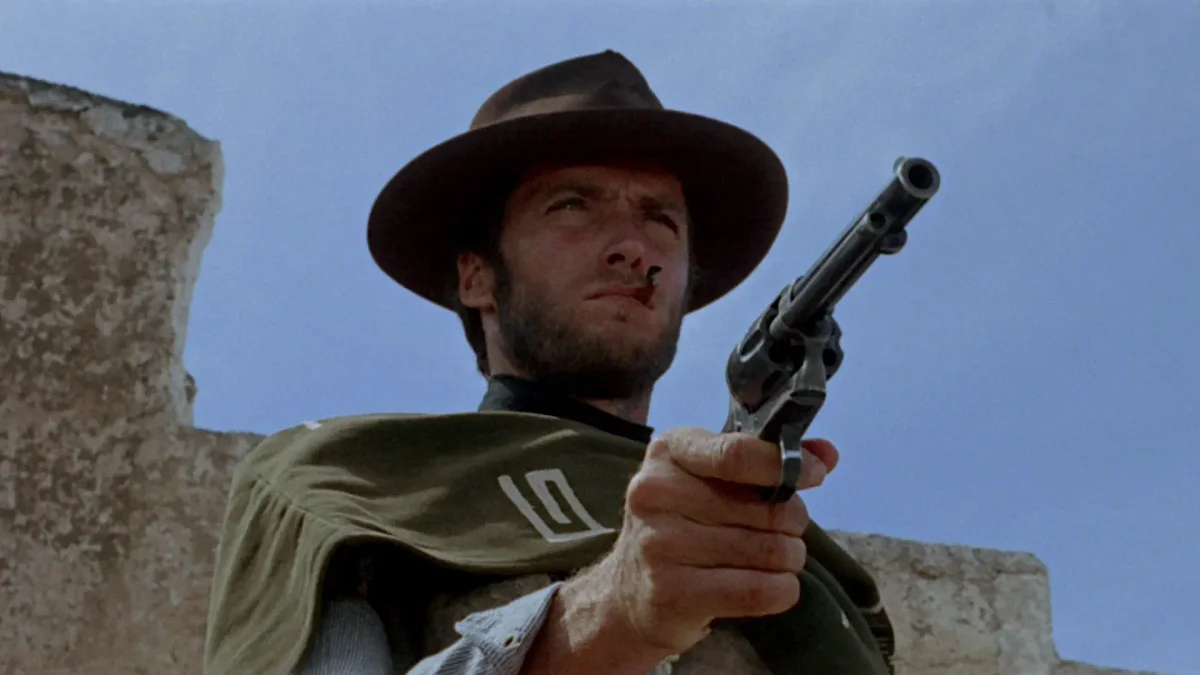
For a Few Dollars More, the second installment in Sergio Leone's renowned Dollar Trilogy, follows A Fistful of Dollars and The Good, the Bad, and the Ugly, bringing the Western genre into a darker, more obsessive realm. The narrative revolves around two bounty hunters, Monco (Clint Eastwood) and Colonel Douglas Mortimer, who appear to be rivals but ultimately join forces to capture El Indio (Gian Maria Volonté), a notorious criminal. Beneath the surface of the heist at the El Paso bank and the million dollars at stake lies a much deeper motive.
The film's conclusion reveals that Mortimer's true objective extends beyond mere monetary gain. His final duel with Indio encapsulates a journey marked by guilt, violence, and memory, symbolized by a small yet significant object: the music box hidden within his pocket watch. As the music plays during their climactic confrontation, Sergio Leone elevates the duel into a ritual of vengeance, offering Mortimer a chance to finally heal a longstanding wound.
How Sergio Leone Transforms the Western into a Tale of Revenge
Released in 1965, For a Few Dollars More solidifies key elements that define Leone's cinematic style: elongated duel sequences, extreme close-ups, the significance of objects, and a departure from traditional heroism. Monco and Mortimer, both accustomed to violence, represent contrasting worlds. Monco is youthful and impulsive, driven by financial reward, while Mortimer is older, methodical, and seemingly focused solely on the bounty.
Their initial rivalry lays the groundwork for a relationship that evolves over time. Monco realizes that Mortimer is a worthy adversary, prompting them to collaborate in infiltrating Indio's gang. The film thus takes on the structure of a heist Western, but Leone gradually interweaves a deeper narrative: Mortimer is not merely pursuing a wanted criminal.
Indio's backstory unfolds through the music box he carries. In a flashback accompanying the melody, the audience learns of a horrific past where Indio killed a man and assaulted his wife, who subsequently committed suicide in front of her brother, unable to intervene. This brother is revealed to be Mortimer. Consequently, the music box serves as an archive of guilt; each time the melody plays, the past resurfaces to haunt the present.
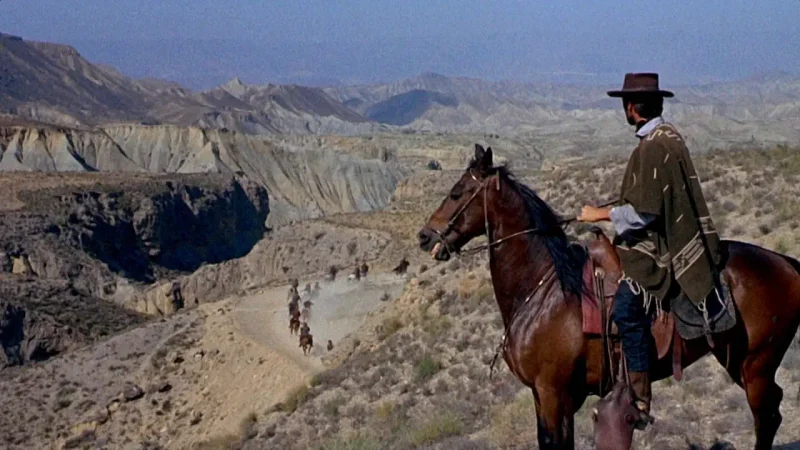
The Finale of For a Few Dollars More: Mortimer's Duel with Indio as a Means to Conclude Unfinished Business
Following the bank heist and betrayal within the gang, Monco and Mortimer systematically eliminate Indio's men. When the final showdown arrives, Mortimer declares Indio's full name, indicating that the hunt has reached its true origin. He is no longer solely interested in bringing Indio to justice; he seeks personal confrontation with the man responsible for his sister's death.
Indio attempts to dictate the terms of the duel, retrieving the music box to establish the rules: the winner will be the one who shoots when the melody ends. This scene stands as one of the most iconic moments in Leone's cinema, as the music's timing directly correlates with the inevitability of death.
The twist occurs when the melody concludes, only for another to begin from a second watch. Monco had previously taken this second watch from Mortimer and hands it over along with a pistol. With the phrase “Now we begin,” Monco recognizes that this moment rightfully belongs to Mortimer.
As the music ends, Mortimer fires first, killing Indio. He then retrieves the watch from Indio’s body, allowing that very object to complete the revelation. Monco observes the resemblance between the woman in the photograph within the watch's case and Mortimer, who confirms he is her brother. Having achieved his revenge, Mortimer relinquishes his share of the bounty.
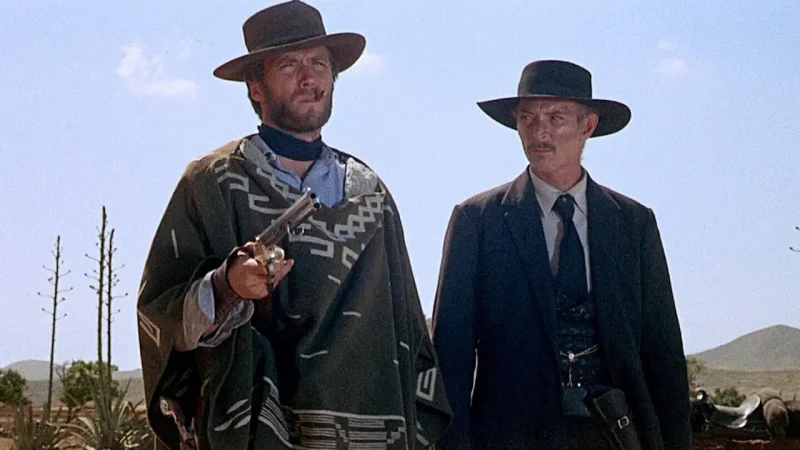
The Music Box and the Final Duel Transform Mortimer's Revenge into a Ritual of Memory
The music box is the pivotal element of the film's conclusion. In a narrative centered around guns, money, and chases, Leone focuses on a seemingly fragile object as the emotional core of the story. The music does not merely accompany the duel; it embodies the traumatic memories that Indio attempted to suppress and that Mortimer has preserved until the moment of reckoning.
Indio, too, is trapped by his past, albeit in a different manner than Mortimer. The criminal uses drugs to numb the memories of his heinous acts, illustrating his inability to escape his past actions. His cruelty stems not from a lack of memory but from his failure to confront his guilt.
Mortimer, in contrast, does not seek to forget. He structures his life around the possibility of confronting the man who took his sister from him. When he finally encounters Indio, he chooses to face him according to the West's rules. Thus, the duel becomes a ritualized form of violence: it is not institutional justice, as Mortimer does not turn Indio over to the authorities. Instead, it is a personal form of justice rooted in his moral code.
This distinction is crucial for understanding Mortimer's character. He is not portrayed as an untainted hero. He is a man willing to kill, navigating a world governed by the law of the strongest. The key difference between him and Indio lies in the motivations behind their violence. The criminal kills for self-interest and survival, while Mortimer kills to close a wound.
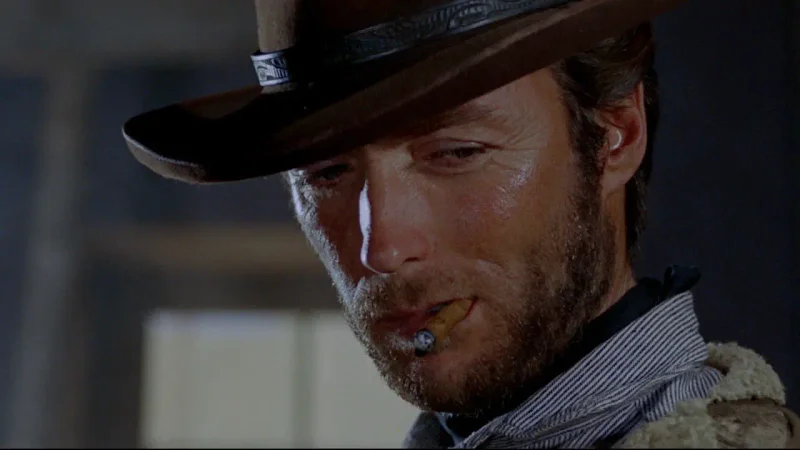
Monco Represents the Future of the Western While Mortimer Belongs to a Past-Dominated World
The dynamic between Monco and Mortimer takes on deeper significance in the film's finale. For much of the story, they appear as mere professionals vying for the same reward, yet they gradually become complementary figures. Monco embodies practical efficiency, energy, and instinct; Mortimer symbolizes experience and memory.
Monco's decision to willingly hand over his gun and belt to Mortimer during the duel is pivotal. He is not merely aiding an ally; he acknowledges that this death is Mortimer's to claim. His gesture displays a form of respect that transcends their initial competition. Once the duel concludes, the two can part ways.
Mortimer's choice to reject the money further reinforces this interpretation. For Monco, the reward remains the tangible motivation for his profession; he ultimately collects the dead bandits' bounties. Mortimer, however, no longer needs anything. He has achieved what he sought from the beginning.
The film thus constructs two perspectives on the hunt for criminals. Monco looks toward the future and the next bounty, while Mortimer has spent the entire narrative reflecting on the past. With Indio's death, his character arc can finally conclude. Therefore, his final departure carries a melancholic weight; it is not an escape but the exit of a man who has ceased to be a prisoner of his past.
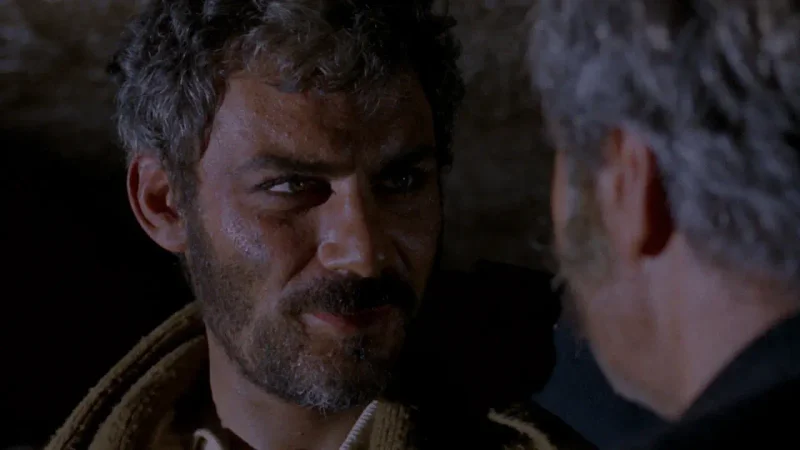
The True Meaning of the Ending of For a Few Dollars More: Money Was Merely the Surface of a Revenge Story
The essence of the film's ending lies in the contrast between its apparent narrative and its deeper themes. On the surface, we witness a criminal pursuit, a heist, a bounty, and a series of duels. Yet beneath this structure, For a Few Dollars More revolves around the interplay of memory and violence.
The music box signifies a past that continues to repeat itself. Its melody returns cyclically, mirroring the memory of the event that shattered Mortimer's life. The duel serves to break that cycle. When Mortimer kills Indio, the music stops, allowing him to finally abandon the quest that has driven him for years.
What follows is also significant. Mortimer does not take the money. His reward is the restoration of balance, according to his own moral code, that was disrupted long ago. In this light, the film's title takes on an ironic nuance: the “dollars more” motivate Monco and represent the adventure's surface, while Mortimer's true motivation cannot be bought.
The ending also clarifies the nature of the relationship between the two protagonists. Monco is destined to continue in the Western world, still tied to the logic of bounties and money. Mortimer, however, can finally escape that cycle. Sergio Leone grants him a form of closure that is rarely afforded to Western characters: the chance to cease fighting.
Thus, Indio's death signifies much more than a showdown; it marks the end of Mortimer's time. The final image of significance is not Monco collecting the money but that of Mortimer walking away without taking his share. After years of living in the shadow of a tragedy, Mortimer has finally obtained what he sought: not a reward, but the conclusion of his quest for vengeance.