
Why 'Annihilation' Deserved a Theatrical Release in Germany
The sci-fi horror film 'Annihilation' was unjustly relegated to Netflix in Germany instead of a theatrical release. Discover why this unique film deserved a big-screen experience and what makes it stand out.

In 2018, the sci-fi horror film "Annihilation" made its way to theaters in many countries, yet it was relegated to a Netflix release in Germany. This decision has been widely criticized, as the film boasts numerous qualities that warranted a big-screen experience. Now, it is available for streaming on Paramount+, allowing a new audience to engage with this unique cinematic work.

For those who keep an eye on Netflix, the film's poster may be familiar. Despite not being a typical crowd-pleaser, "Annihilation" received substantial promotional efforts upon its release. The story revolves around a mysterious area where bizarre phenomena occur, and while it may seem uninviting at first glance, it conceals one of the most compelling films of recent years. Notable stars from the Marvel Cinematic Universe, including Natalie Portman and Tessa Thompson from "Thor: Love and Thunder," as well as Oscar Isaac from "Moon Knight" and Benedict Wong from "Doctor Strange 2," contribute to its star-studded cast.
Despite its impressive lineup and a standard theatrical release in the U.S., German sci-fi enthusiasts were left with only a Netflix option. Given its exceptional qualities, "Annihilation" truly deserved to be showcased on the big screen!
The film's Netflix exclusivity is now a thing of the past, as it has been released on Blu-ray/DVD and has even aired on free television. You can now stream "Annihilation" as part of the Paramount+ subscription service:
Additionally, the film is still available on Amazon Prime Video, but only until August 15, when it will be removed from the platform:
The Plot of "Annihilation"
The narrative unfolds in Area X, a North American region where an asteroid impact has raised numerous questions among scientists. Expeditions are launched to investigate the anomalies, yet none return. When Kane (Oscar Isaac), a member of a previous expedition and the husband of Lena (Natalie Portman), unexpectedly returns, he appears altered. Lena is drawn to the research facility studying Area X, seeking answers about her husband.
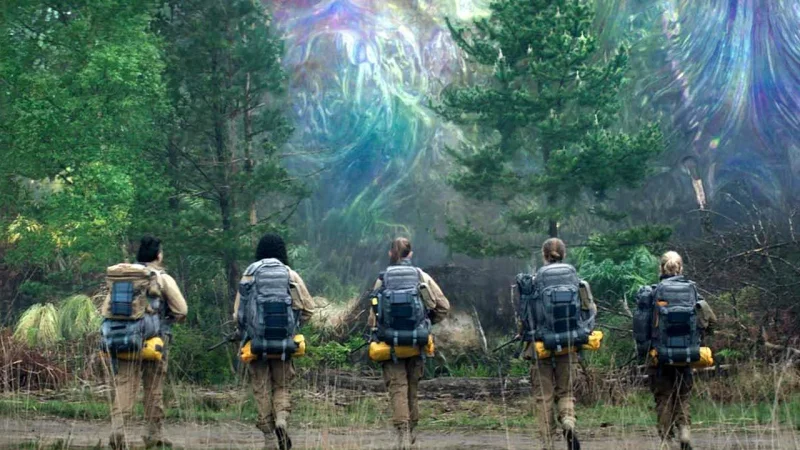
Determined to help him, she joins the next expedition. Upon entering Area X, delineated by a strange boundary known as the "Shimmer," the all-female team embarks on a scientific mission involving sample collection, observations, and data analysis. However, they quickly realize that something is amiss. Their objective is clear: reach a lighthouse near the coast and uncover the source of the anomalies and peculiar occurrences in the zone.
A Literary Science Fiction Masterpiece
"Annihilation" is based on the novel of the same name by American author Jeff VanderMeer, the first installment of the Southern Reach Trilogy. While the film remains faithful to the source material, director Alex Garland (known for "Ex Machina") skillfully extracts the best elements of the story. Unlike many disappointing adaptations, such as Dan Brown's "Inferno," which leaves viewers with a contrived happy ending, Garland's approach is a breath of fresh air.
"Annihilation" impresses on multiple fronts: visually, narratively, philosophically, and beyond. The film's core themes are elusive, challenging audiences to grapple with the unknown and the unfathomable. Just as viewers are bewildered by the Shimmer and Area X, so too are the characters within the film.
Though the natural world within the mysterious zone appears unchanged at first glance, it soon becomes evident that they have entered a completely different realm or dimension. This sense of the inexplicable leads to a futile search for answers. Rather than overwhelming the audience with constant questions, Garland provides just enough information to fuel curiosity, striking a perfect balance between subtlety and exposition that often derails other films.
Cosmic Horror
As the journey unfolds through forests, swamps, and marshes, the imagery breathes and fully resonates. While fear lingers at every turn, the researchers maintain a rational demeanor—at least initially. "Annihilation" explores human rationality, the desire for structure, and the essence of humanity. In the chaos of Area X, the loss of control quickly spirals into pure fear and panic, brilliantly portrayed and adding further depth to the sci-fi narrative. Yet, there is more to uncover.
Unpredictable Moments that Linger
The film's unpredictability keeps viewers on edge, making it impossible to anticipate what will happen next. Surprise moments, filled with both terrifying and intriguing imagery, captivate the audience.
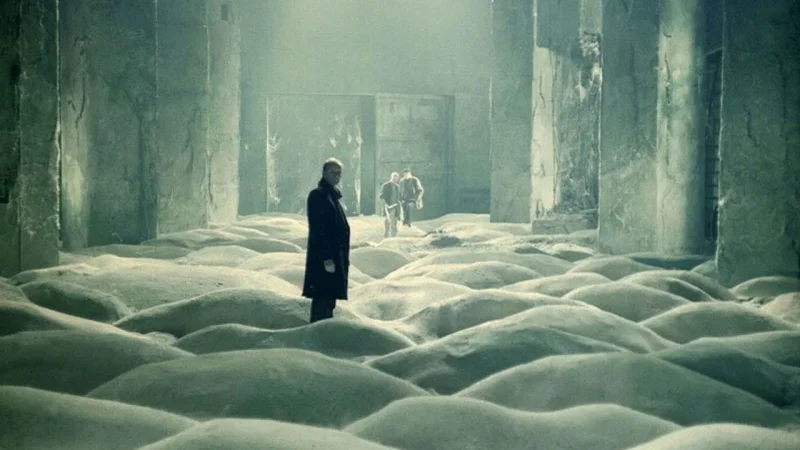
The premise of a mysterious zone may remind some viewers of Andrei Tarkovsky's classic "Stalker" from 1979, but this should not detract from the film's merit. Criticizing the vibrant visuals in Garland's work while elevating Tarkovsky's film to an absolute standard undermines the cinematic possibilities. The computer-generated effects in "Annihilation" create a sense of otherworldliness in nature, and simply replicating "Stalker" would not only be unoriginal but would also limit the film's artistic scope.
 Paramount Pictures
Genetics as an Immediate Human Theme
Genetic themes, which were memorable in "Gattaca," also play a significant role in "Annihilation." Equipped with advanced technology, the scientists gradually uncover the mysteries of Area X. While Garland's film remains complex, it avoids overwhelming the audience with excessive information. The premise—dissolution of humanity—holds both scientific and philosophical significance.
Although the German title refers to "Auslöschung," the original English title, "Annihilation," is more fitting, as it encompasses translations like annihilation, extinction, or even terms like dissolution (the fading of self-awareness). Ultimately, "Annihilation" addresses the minuscule at the molecular level while also contemplating the larger whole, captured within the alternate dimension of Area X. The clash between relentless nature and human fragility ensures that Garland's work lingers in the mind long after viewing.
Positively Overwhelming
Despite its enigmatic nature, "Annihilation" demonstrates that such complexity is not inherently negative or unbearable. The world within the Shimmer oscillates between dream and nightmare. While the fear of chaos, loss of control, and the unknown elicits discomfort, it also presents a clear philosophical stance on the interconnectedness of all existence.
The anxieties surrounding the potential loss of humanity become central to the film, infusing it with profound poetry. The characters, along with the audience, confront the same question: Are we prepared to endure such imagery? Garland does not offer a choice; instead, he demands that viewers confront this horror. This cinematic bravery renders Garland's works as uniquely extraordinary.
 Paramount Pictures
Conclusion on "Annihilation"
By tackling themes such as the unfathomable, human fears, genetics, and philosophy, "Annihilation" operates at a high level, culminating in a grand yet peculiar ending that secures its place among the best and most unconventional films of recent years.
Echoing the cryptic works of Benson and Moorhead and dreamlike yet nightmarish in the style of David Lynch, Garland successfully combines the essential ingredients for a masterpiece in this genre: dreamlike and nightmarish visuals, atmospheric density, terror, timelessness, poetry, and unforgettable cinematic moments. It is truly a shame that we were unable to experience this on the big screen in Germany.
You may also like