
Understanding Mini Waves vs. Wavy Perms for Short, Fine Hair
Explore the differences between mini waves and wavy perms for short, fine hair. Understand how each technique works, their effects, and how to choose the right one for your style.
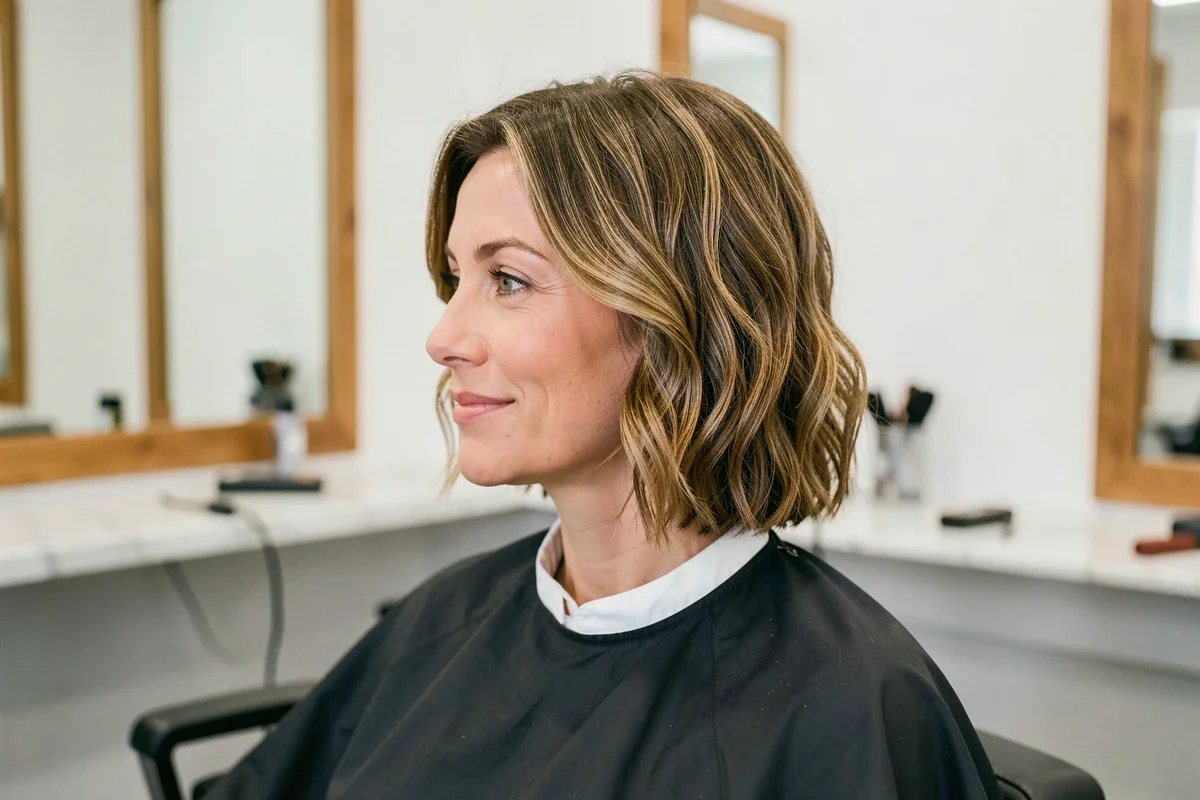
A short bob lacking movement and fine strands that fall flat right after a wash is a common issue. To combat this, many turn to two popular salon treatments: the mini wave and the wavy perm. Both promise to add waves to fine, short hair, but they operate differently and yield distinct results.
Mini Waves and Wavy Perms: What Happens in the Hair Fiber
Before deciding between the two options, it’s essential to understand their similarities. Both the mini wave and wavy perm utilize a thioglycolate-based chemical product. This chemical opens the internal bonds of keratin (the disulfide bridges) to reshape the hair around rollers or rods.
A fixing agent then closes these bonds in the newly formed wavy shape. This ensures that the hair retains its style even after multiple washes, which is a key difference from waves created with a curling iron or salt spray, as those styles fade after the first wash.
The distinction between mini waves and wavy perms does not lie in the chemical principle but rather in three concrete parameters: the diameter of the rollers, the processing time, and the concentration of the product.
Roller Diameter and Product Concentration: Where the Real Difference Lies
You may have noticed that some waves appear more natural while others are more defined. This is directly related to the size of the rollers used.
Mini Wave: Large Rollers for Soft Waves
The mini wave employs large-diameter rollers. The result is a broad wave, resembling a “beachy” or “scrunched” look. The product applied is typically less concentrated, and the processing time is shorter.
On fine, short hair, this technique adds volume without creating tight curls. The mini wave enhances body and movement without drastically altering the hair's texture.
Wavy Perm: Smaller Rollers for Defined Curls
In contrast, the wavy perm uses medium-diameter rollers. The product works longer on the hair fiber, resulting in a more defined curl that resembles a structured wave.
On short hair, the visual difference is significant. While the mini wave provides a “woke up like this” effect, the wavy perm creates a visible and consistent movement that structures the cut.
Fine, Short Hair: Which Process Causes Less Damage?
This is a crucial question for those with fine hair. A fine fiber has a thinner cortex, making it more susceptible to chemical treatments. Both techniques alter the internal structure of the hair, but they do so with varying intensities.
- The mini wave, with its less concentrated product and shorter processing time, is gentler on the fiber. It is better suited for fine hair that has never been colored or has only been lightly colored.
- The wavy perm exposes the hair to the product for a longer duration. On fine hair that has already been weakened by coloring or highlights, the risk of dryness increases.
- In both cases, a hair diagnosis at the salon prior to treatment is essential to assess the actual condition of the fiber and tailor the formula accordingly.
A short, fine hair has an advantage: its limited length means the ends are recent and thus in better condition. The process is generally better tolerated than on lengths damaged by years of styling.
Longevity and Maintenance: How Long Do Waves Last?
The longevity of the waves depends on the rate of hair growth. Since the process alters the fiber permanently, the waves do not simply “disappear.” Instead, they are gradually replaced by smooth growth at the roots.
On short hair, this phenomenon is easier to manage. Regular trims eliminate the wavy sections over time, preventing an unsightly demarcation between smooth roots and curly lengths.
- The mini wave on fine, short hair loses its visible effect more quickly, as the waves are subtle. Expect a few weeks before the result noticeably fades.
- The wavy perm, with its more pronounced curls, remains visible longer. The transition with new growth can create a contrast that requires regular maintenance through frequent trims.
- To extend the results of both techniques, using sulfate-free products and gentle drying methods helps preserve the waves better than vigorous styling.
Choosing Between Mini Waves and Wavy Perms for Short Cuts
The decision is not merely about “more or less curly.” It depends on your daily expectations.
If your goal is to add volume and texture to a short bob without drastically changing your style, the mini wave is a logical choice. It gives fine hair bounce without imposing a specific styling routine.
If you desire a distinctly identifiable wavy movement, with waves visible even on very short cuts, the wavy perm provides a more pronounced result. However, it requires more careful maintenance to avoid a straw-like effect on the ends.
Both techniques are performed exclusively in salons. No at-home kit can control processing time and product concentration accurately enough for fine hair. A stylist customizes the formula to your hair’s thickness, making a significant difference between achieving a natural result and risking hair damage.
The good news for short cuts is that managing regrowth is straightforward with regular salon visits. There’s no need to wait months while enduring an undefined transition. A trim every few weeks is sufficient to maintain a consistent look, regardless of the chosen technique.
You may also like